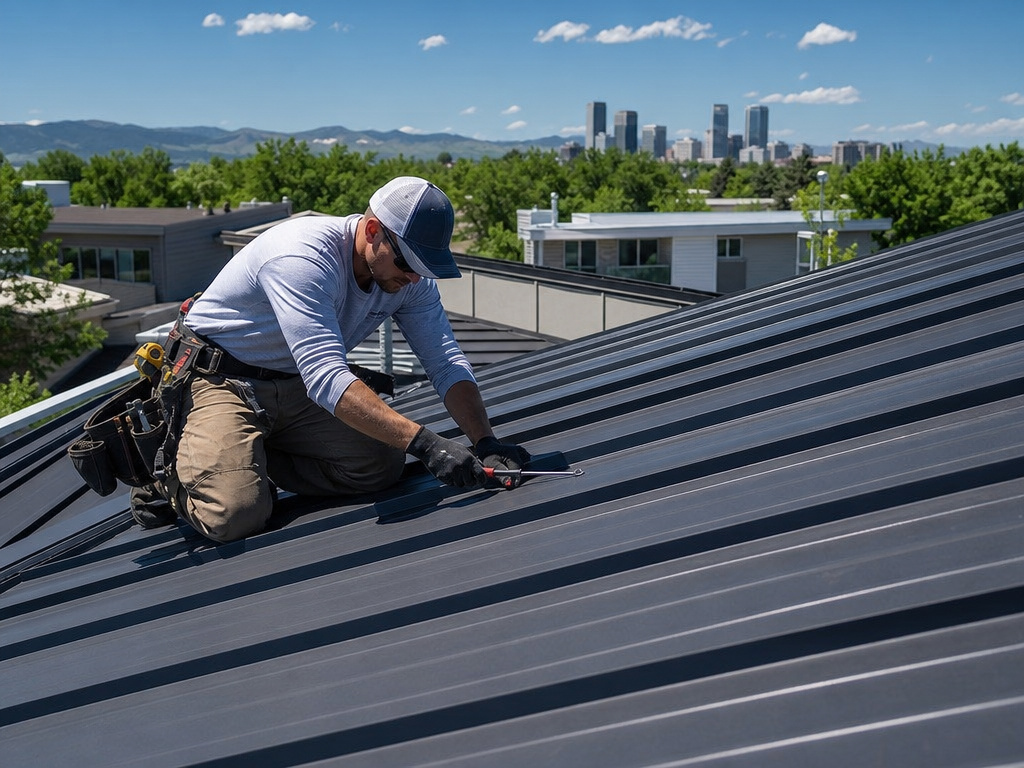
Metal roofs handle Denver hail better than asphalt when panels are 24- or 26-gauge with proper clip spacing and impact-rated underlayment. Standing seam systems shed heavy spring snow loads that accumulate near Red Rocks Park while the reflective surface cuts summer heat gain on south-facing slopes common in Cherry Creek and Highland.
We remove existing roofing down to the deck, replace damaged sheathing, and install ice-and-water shield at all valleys and eaves before laying 30-lb felt or synthetic underlayment. In Capitol Hill and around the Denver Art Museum, we coordinate with historic district guidelines on color and seam style while meeting Denver's wind-uplift and fire-rating requirements.
Edge cases include steep pitches above Union Station townhomes that need extra snow retention and low-slope transitions where we add cricket saddles. All work follows the details on license 1241222; final walkthrough includes torque checks on every fastener and magnet sweep for dropped screws.
How it works
- 1
Site assessment
Measure roof, note hail damage patterns, check deck condition and attic ventilation from Shys Hill Rd base.
- 2
Tear-off and prep
Remove old roofing, repair or replace decking, install ice-and-water membrane at eaves and valleys.
- 3
Panel installation
Lay chosen profile with hidden clips, seal penetrations, and trim to existing chimneys and skylights.
- 4
Final inspection
Torque test fasteners, verify flashing, clean site and provide maintenance guide.
Pricing
Metal roof cost varies with gauge, profile, roof complexity and access in neighborhoods like Cherry Creek. We provide free on-site estimates Mon–Fri 8am–6pm and Sat 9am–2pm.