2026-07-07 · Alex Santos
How Denver Hail Storms Affect Asphalt Shingles and What to Check After a Storm
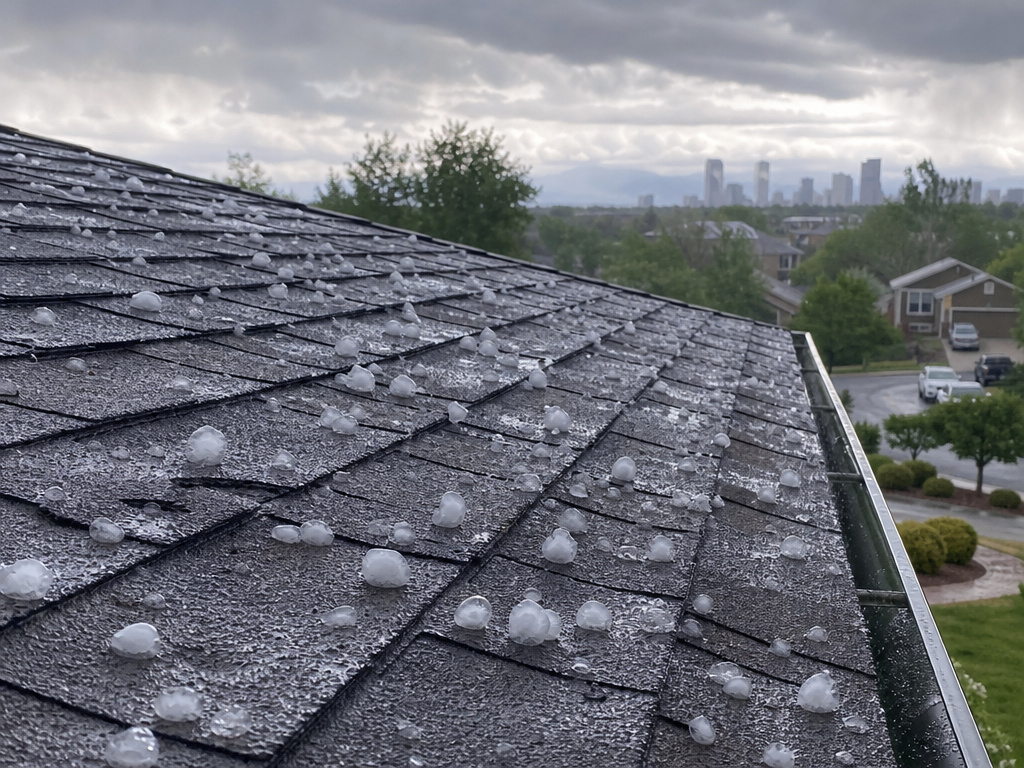
Denver sits in a region where warm afternoons collide with cooler mountain air, spawning hailstorms that can drop stones the size of quarters or larger. These events often peak in late spring and early summer when moisture from the plains meets upslope flow near the Front Range.
Asphalt shingles take the brunt because their surface granules are only loosely embedded. A direct hit fractures the coating, loosens granules, and can split the fiberglass mat, allowing water to reach the deck during the next rain.
After any hail event, start by checking gutters and downspouts for an unusual volume of granules; more than a handful per downspout suggests widespread shingle wear. Walk the roof at first light when hail dents show as clean, round depressions without the normal shadow of granule texture.
Pay special attention to south- and west-facing slopes that receive the hardest angle from storms moving off the mountains toward Red Rocks Park and Union Station. In older sections of Capitol Hill and Highland, layered shingles from previous decades often reveal damage first at the edges and ridge caps.
Examine flashing around chimneys, skylights, and valleys for dents or lifted sealant. If the underlayment feels soft underfoot or daylight shows through lifted tabs, the storm has likely compromised protection beyond simple surface repair.
Document every area with photos that include the date and a ruler for scale. This record becomes useful when deciding between targeted fixes and full roof replacement once multiple slopes show granule loss or cracked tabs.